15 Interview Questions to Ask Candidates When Polished Answers Aren't Enough
Interview fantastic. Employee terrible.
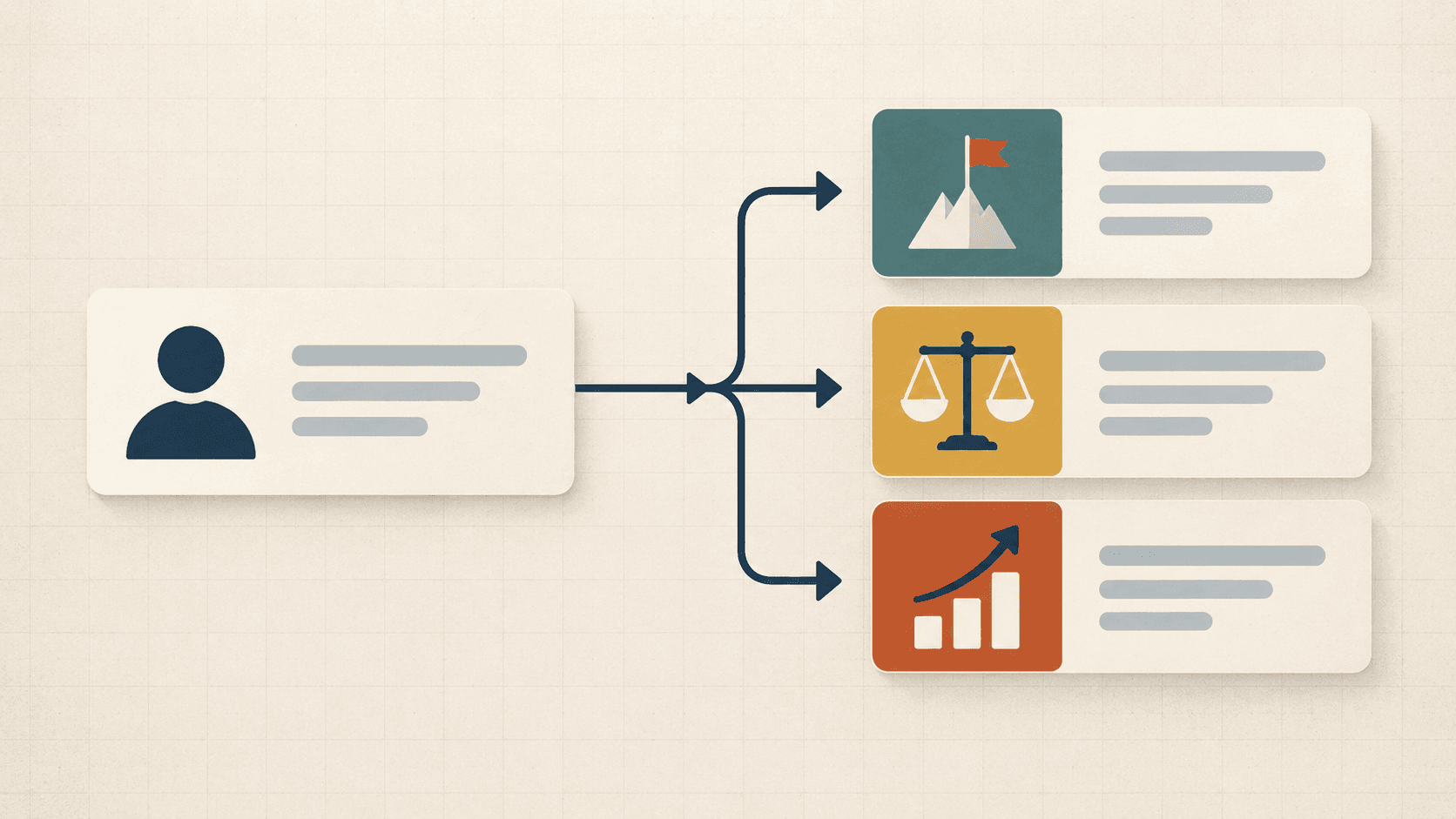
When that happens, the problem is usually not that you asked too few interview questions. It is that you treated a polished first answer as evidence.
Candidates can prepare for predictable questions. They can practise a confident introduction, choose a safe weakness and memorise a tidy story about overcoming a challenge. None of that makes the answer dishonest. It simply means that the first response often shows how well someone prepared for the interview, not how they will perform in the job.
The useful evidence tends to arrive one question later.
What did you personally do? Which option did you reject? Who disagreed with you? What changed as a result? What would your manager say happened?
The best interview questions to ask candidates are therefore not clever riddles or attempts to catch someone out. They are consistent, job-related questions with follow-ups that turn broad claims into specific evidence.
This guide gives you 15 of them, explains what each question tests and shows what to listen for before you score an answer.
The best interview questions to ask candidates
If you need a short list before your next interview, start here.
| Interview question | What it tests | Most useful follow-up |
|---|---|---|
| What attracted you to this role? | Motivation and role alignment | Which part of the actual work interests you most? |
| Tell me about a result you owned from beginning to end. | Ownership and impact | What was specifically yours to decide or deliver? |
| Tell me about a time your work did not go to plan. | Accountability | What part of the outcome did you own? |
| What feedback changed the way you work? | Coachability | What did you do differently afterwards? |
| Tell me about a time several priorities competed for your attention. | Prioritisation | What did you delay, and why? |
| Describe a decision you made without having all the information you wanted. | Judgement | What risk were you accepting? |
| Tell me about something difficult you had to learn quickly. | Learning agility | How did you know you had learned it well enough? |
| Tell me about a disagreement with a colleague or manager. | Collaboration and conflict | What did you change after hearing their position? |
| Tell me about repetitive or unglamorous work you still had to do well. | Reliability | How did you maintain quality when motivation dropped? |
| Tell me about a problem you noticed before anyone asked you to fix it. | Initiative | How did you decide it was worth acting on? |
| Tell me about a commitment you realised you could not meet. | Reliability and communication | When did you tell the people affected? |
| Tell me about a difficult customer or stakeholder. | Empathy and judgement | What did you do when your first approach did not work? |
| Tell me about a process you improved. | Practical problem-solving | What measurable difference did the change make? |
| How would previous colleagues describe working with you? | Self-awareness | What would they say you still need to improve? |
| What would you need to understand in your first 30 days here? | Role understanding | What would you investigate before proposing changes? |
Do not ask all 15 simply because they are available. Choose the questions that map to the requirements of the role, ask the same core set to every candidate and decide what a strong answer should contain before the interview begins.
Why impressive interviews still produce disappointing hires
An interview is a performance environment. Some people are naturally comfortable in it. Others have had more practice, received better coaching or learned the vocabulary hiring managers expect to hear.
That creates three common traps.
The first is fluency bias. A confident, well-organised answer feels more credible than a hesitant one, even when both contain the same amount of job-relevant evidence.
The second is the halo effect. One appealing quality—charisma, shared interests, an impressive employer or an early success story—starts colouring the interviewer’s interpretation of everything that follows.
The third is inconsistent comparison. One candidate gets a relaxed conversation about leadership. Another gets detailed questions about deadlines. A third spends half the interview discussing a mutual connection. The hiring manager then tries to compare three people who were never given the same opportunity to demonstrate the same capabilities.
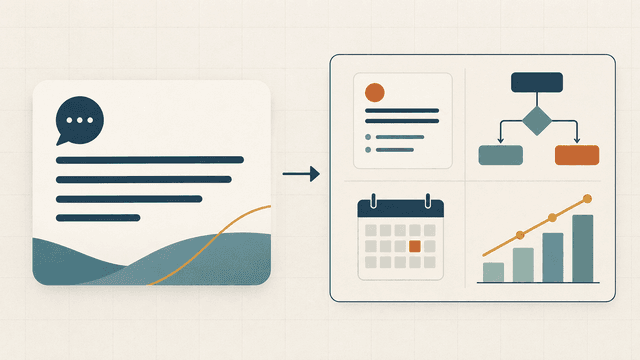
A structured interview reduces those problems by using predetermined, job-related questions and consistent evaluation criteria. The US Office of Personnel Management defines structured interviews around the same basic elements: candidates receive the same questions, and their responses are evaluated using the same rating scale and standards.
The CIPD's guidance on selection methods makes a similar recommendation: define the questions and scoring criteria in advance, record evidence and score candidates independently before the interview panel discusses them.
Structure does not make an interview robotic. It makes the evidence comparable.
How to use these questions in a structured interview
Before choosing questions, identify the four to six competencies that genuinely matter in the job. A customer support role might require listening, written communication, judgement and emotional regulation. A small-business operations hire might need reliability, prioritisation, initiative and comfort with ambiguity.
Then follow five rules.
- Ask every candidate the same core questions. You can clarify an answer, but do not give a preferred candidate an easier interview.
- Use predetermined follow-ups. Consistent probes make the comparison fairer while still allowing you to investigate vague answers.
- Take evidence-based notes. Record what the person did, why they did it and what happened—not whether you “liked their energy.”
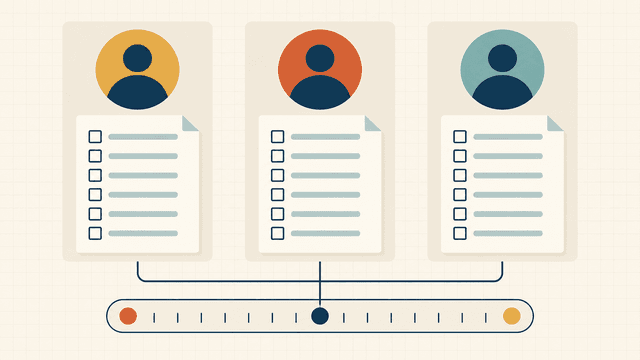
- Score before discussing. If several people are interviewing, each person should record a score before hearing the most senior person’s opinion.
- Use more than the interview. References, work samples and job-related tasks can test claims that conversation alone cannot establish.
If you are still designing the wider process, start with the guide to running a first-round interview. For a broader comparison of formats and their trade-offs, see the guide to interview methods for small businesses.
15 interview questions and the follow-ups that matter
The examples below are written broadly enough to adapt across roles. Replace generic words such as “result,” “customer” or “project” with language drawn from the actual job.
1. What attracted you to this role?
What it tests: Motivation and whether the candidate understands the work rather than merely wanting a new job.
Follow up with: “Which part of the day-to-day work interests you most?” Then ask, “Which part do you expect to find less enjoyable?”
Strong evidence: The candidate connects specific responsibilities to work they have enjoyed, skills they want to use or an environment in which they know they perform well. They can discuss both attractive and less attractive parts of the role without pretending every task is exciting.
Evidence still missing: Generic enthusiasm about the company, industry or “growth” without reference to the work. Motivation matters, but enthusiasm is not proof of capability.
2. Tell me about a result you owned from beginning to end
What it tests: Ownership, execution and the ability to distinguish individual contribution from team achievement.
Follow up with: “What was specifically yours to decide or deliver?” Ask what the starting position was, what actions they took and what changed afterwards.
Strong evidence: A clear baseline, personal responsibility, concrete decisions and an outcome the candidate can explain. The result does not have to be enormous. Improving a handover, correcting a recurring error or retaining one difficult customer can be highly relevant.
Evidence still missing: Repeated use of “we” with no explanation of the candidate’s own role. Team language is not a problem by itself; the interviewer simply needs to understand the contribution being evaluated.
3. Tell me about a time your work did not go to plan
What it tests: Accountability, recovery and learning.
Follow up with: “What part of the outcome did you own?” Then ask when they first realised there was a problem, whom they told and what they changed.
Strong evidence: The candidate identifies a real shortfall, separates contextual factors from personal responsibility and explains a specific change in behaviour or process. A strong answer does not require a dramatic failure.
Evidence still missing: A disguised success story, a failure caused entirely by someone else or a lesson expressed only as “communicate more.” Ask what the candidate now does differently and look for a concrete example of that change.
4. What feedback changed the way you work?
What it tests: Coachability and the ability to turn feedback into changed behaviour.
Follow up with: “What did you do differently the next week?” If the answer remains abstract, ask for a later situation in which the candidate applied the feedback.
Strong evidence: The candidate can explain the original behaviour, how the feedback was delivered, what they changed and how they know the change helped.
Evidence still missing: Praise presented as criticism, such as being told they care too much, or agreement with feedback that produced no observable change. Receiving feedback calmly is useful; applying it is the stronger signal.
5. Tell me about a time several priorities competed for your attention
What it tests: Prioritisation, trade-offs and communication under pressure.
Follow up with: “What did you deliberately delay, reduce or decline?” Then ask who was affected and how the candidate communicated the decision.
Strong evidence: The candidate used relevant criteria—customer impact, risk, deadline, revenue, dependency or effort—to decide. They recognised that prioritisation means something receives less attention.
Evidence still missing: “I worked longer and finished everything.” That may occasionally be true, but it avoids the decision the question is designed to reveal. Change the scenario: “What if extra hours were not available?”
6. Describe a decision you made without having all the information you wanted
What it tests: Judgement under uncertainty and risk awareness.
Follow up with: “Which information was missing, and what risk were you accepting?” Ask what would have caused them to pause or reverse the decision.
Strong evidence: The candidate distinguishes essential information from information that would merely be reassuring. They explain the downside, seek an appropriate level of input and create a way to detect if the decision is going wrong.
Evidence still missing: Recklessness described as decisiveness, or endless research described as thoroughness. Strong judgement sits between acting blindly and waiting for certainty that will never arrive.
7. Tell me about something difficult you had to learn quickly
What it tests: Learning agility, resourcefulness and self-management.
Follow up with: “How did you decide what to learn first?” Then ask how they checked whether their understanding was correct.
Strong evidence: A deliberate learning process: breaking the skill into parts, finding credible help, practising, asking for feedback and testing performance against a real standard.
Evidence still missing: Merely completing training or watching tutorials. Exposure is not the same as competence. Ask what the candidate could do afterwards that they could not do before.
8. Tell me about a disagreement with a colleague or manager
What it tests: Collaboration, listening and constructive conflict.
Follow up with: “What did you change after hearing their position?” Then ask how the disagreement ended and how the working relationship was affected.
Strong evidence: The candidate can represent the other person’s reasoning fairly, distinguish the issue from the person and describe an appropriate resolution. They may have persuaded, compromised, escalated or accepted the other view.
Evidence still missing: A story in which the other person was obviously unreasonable and the candidate learned nothing. Do not require a tidy ending, but look for evidence of perspective-taking and professional conduct.
9. Tell me about repetitive or unglamorous work you still had to do well
What it tests: Reliability when novelty, visibility or excitement is low.
Follow up with: “How did you maintain quality when your motivation dropped?” Ask what checks, routines or standards they used.
Strong evidence: The candidate respects the operational importance of routine work and has a method for completing it accurately. They may use checklists, time blocks, batching, peer checks or simple automation.
Evidence still missing: A claim that they never lose motivation. The useful signal is not permanent enthusiasm; it is dependable performance when enthusiasm is absent.
10. Tell me about a problem you noticed before anyone asked you to fix it
What it tests: Initiative and the judgement to act without creating unnecessary disruption.
Follow up with: “How did you decide it was worth acting on?” Then ask what authority they had, whom they consulted and how they avoided solving the wrong problem.
Strong evidence: The candidate noticed a meaningful issue, gathered enough context, involved the right people and took proportionate action. The result may be a fix, a well-supported recommendation or a decision not to proceed.
Evidence still missing: Activity presented as initiative without evidence that the problem mattered. Initiative is valuable when it is directed at useful outcomes, not when it produces motion for its own sake.
11. Tell me about a commitment you realised you could not meet
What it tests: Reliability, early communication and recovery planning.
Follow up with: “When did you tell the people affected?” Then ask what options they offered and what they changed to prevent a repeat.
Strong evidence: The candidate identified the risk early, communicated before the deadline, proposed realistic alternatives and followed through on a revised commitment.
Evidence still missing: Heroic last-minute recovery with no recognition that others were exposed to unnecessary uncertainty. Meeting a deadline is good; making risk visible early is often the more transferable behaviour.
12. Tell me about a difficult customer or stakeholder
What it tests: Listening, emotional regulation and practical judgement.
Follow up with: “What did you do when your first approach did not work?” Ask what the other person actually needed and which boundaries the candidate had to maintain.
Strong evidence: The candidate listens for the underlying issue, adapts their communication and works toward a useful resolution without promising something the business cannot deliver.
Evidence still missing: A story centred on how unreasonable the customer was. The customer may genuinely have behaved badly, but the question is assessing the candidate’s choices within that situation.
13. Tell me about a process you improved
What it tests: Practical problem-solving and continuous improvement.
Follow up with: “What measurable difference did the change make?” Then ask who used the process, what resistance appeared and whether the improvement lasted.
Strong evidence: The candidate can describe the old process, the constraint, the change and an observable result such as reduced errors, faster completion, fewer handoffs or clearer accountability.
Evidence still missing: A new document, tool or meeting with no evidence that work improved. The output of process improvement is better performance, not simply more process.
14. How would previous colleagues describe working with you?
What it tests: Self-awareness and understanding of interpersonal impact.
Follow up with: “What would they say you still need to improve?” Ask for a recent example that supports both the strength and the limitation.
Strong evidence: A balanced description with specific behaviours. The candidate understands that a useful strength can have a cost—for example, moving quickly may require extra effort to keep others informed.
Evidence still missing: A list of flattering adjectives with no examples, or a weakness that could never affect performance. Treat the answer as a hypothesis to test against other evidence, not as a reference check.
15. What would you need to understand in your first 30 days here?
What it tests: Role understanding, curiosity and the tendency to diagnose before acting.
Follow up with: “What would you investigate before proposing changes?” Tailor the question by supplying one or two genuine facts about the role.
Strong evidence: The candidate wants to understand customers, expectations, workflows, constraints, relationships and success measures. Their questions reflect the seniority and scope of the position.
Evidence still missing: A detailed transformation plan built on assumptions. Confidence is useful, but candidates should recognise what they cannot know from the job advertisement and interview alone.
Follow-up questions that get past rehearsed answers
You do not need to improvise a clever probe every time an answer feels thin. A small set of neutral follow-ups works across most competencies.
- What was the situation before you became involved?
- What were you personally responsible for?
- What did you do first?
- Which alternatives did you consider?
- What trade-off did you make?
- Who disagreed with you?
- How did you measure the result?
- What would the other people involved say happened?
- What did you learn?
- What do you do differently now?
The purpose is clarification, not interrogation. Give candidates time to think. Do not interpret a pause, nervousness or imperfect storytelling as proof that the experience is false. Some excellent employees are average interview performers, particularly when the interview format or language is unfamiliar.
The STAR method can help you recognise whether an answer contains a situation, task, action and result. It should be used as an organising tool, not a speaking-style test. A candidate can provide strong evidence without presenting it in four polished sections.
How to score candidate answers consistently
A number alone is not a scoring system. “Three means average” still leaves every interviewer free to invent a different definition of average.
Before the interview, write behavioural anchors for each competency. A simple five-point scale can begin like this:
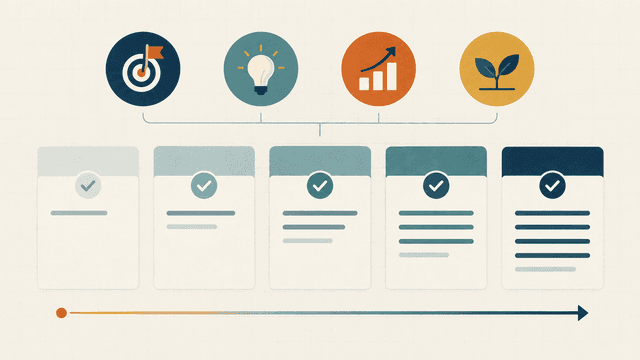
| Score | General anchor |
|---|---|
| 1 — No evidence | No relevant example, or the answer does not establish what the candidate did |
| 2 — Limited evidence | A partly relevant example with unclear ownership, reasoning or outcome |
| 3 — Sufficient evidence | A relevant example with clear actions and an adequate result |
| 4 — Strong evidence | Specific reasoning, appropriate trade-offs and a clearly demonstrated result |
| 5 — Exceptional evidence | Strong evidence in a context at least as demanding as the role, with learning that transferred to later work |
Then customise the anchors. Reliability in a payroll role does not look identical to reliability in a sales role. Judgement for a new graduate should not be benchmarked against judgement for a head of operations.
Record the evidence first and the score second. If two interviewers disagree, return to the notes and the criteria rather than negotiating based on confidence or seniority.
For a complete worked example, use the interview scorecard template. It shows how to define anchors before a persuasive candidate retroactively changes your idea of what “good” looks like.
Interview questions to avoid
Some questions produce little job-related evidence. Others create unnecessary bias or legal risk.
Avoid:
- Brain-teasers with no relationship to the work
- “What animal would you be?” and similar personality theatre
- Leading questions that reveal the answer you want
- Vague culture-fit questions that reward similarity to the existing team
- Personal questions about family plans, health, religion or other protected characteristics
- Questions that assess confidence when confidence is not a requirement of the job
- Hypothetical scenarios when a relevant past example or work sample is available
Employment law varies by jurisdiction. Keep questions tied to genuine job requirements and obtain appropriate local advice for legal or accommodation questions. Australian employers can consult the Australian Human Rights Commission's recruitment guide, while US employers can review the EEOC's guidance on pre-employment inquiries.
Also be careful with the language of “red flags.” A candidate who is nervous, pauses before answering, avoids eye contact or has an employment gap has not demonstrated poor performance. Judge the evidence that relates to the role.
The 10-question shortlist for a shorter interview
If time is limited, use these ten questions:
- What attracted you to this role?
- Tell me about a result you owned from beginning to end.
- Tell me about a time your work did not go to plan.
- What feedback changed the way you work?
- Tell me about a time several priorities competed for your attention.
- Describe a decision you made without having all the information you wanted.
- Tell me about something difficult you had to learn quickly.
- Tell me about a disagreement with a colleague or manager.
- Tell me about a commitment you realised you could not meet.
- What would you need to understand in your first 30 days here?
For a 30-minute interview, choose five or six rather than rushing through all ten. A smaller number of well-probed answers usually produces more useful evidence than a long list of superficial responses.
From good questions to a good hiring decision
No interview question can guarantee a successful hire. Hiring contains uncertainty, and an interview can only sample a portion of someone’s past work and likely future behaviour.
The goal is to improve the evidence available for the decision.
Choose questions from the requirements of the job. Ask them consistently. Probe broad claims. Score against criteria written in advance. Then combine the interview with other relevant evidence instead of allowing one impressive conversation to decide everything.
That is the difference between remembering that a candidate interviewed well and being able to explain why the evidence supports hiring them.
If you are weighing several candidates, use the framework for making a good hiring decision without relying on gut feel. If the consequences of getting it wrong feel abstract, the cost-of-a-bad-hire calculator and worked example can help you identify the risks that matter in your business.
HireMike helps small businesses collect structured first-round interview evidence before a manager’s time is consumed by repetitive screening. See how the HireMike hiring process works.
Frequently asked questions
What are the top 10 questions to ask an interviewee?
The most useful ten questions cover motivation, ownership, accountability, coachability, prioritisation, judgement, learning, conflict, reliability and role understanding. Use the ten-question shortlist above, but select only the questions tied to the requirements of the job. Ask every candidate the same core questions and use consistent follow-ups and scoring criteria.
What are the five best questions to ask a candidate?
For a short interview, ask about a result the candidate owned, work that did not go to plan, feedback that changed their behaviour, competing priorities and a decision made with incomplete information. Together, those questions collect evidence about ownership, accountability, coachability, prioritisation and judgement.
What is the best interview question to ask a candidate?
There is no universally best interview question because the most useful question depends on the job. A strong general question is: “Tell me about a result you owned from beginning to end.” Follow it by asking what the candidate personally did, which decisions they made and what changed. The follow-up is what turns the claim into evidence.
What are five STAR interview questions?
Five useful STAR-style questions ask about a difficult problem, a missed expectation, competing deadlines, critical feedback and a disagreement at work. STAR questions invite candidates to explain the situation, their responsibility, the action they took and the result. Interviewers should evaluate the evidence, not how perfectly the candidate follows the format.
How many questions should an interviewer ask?
In a 30-minute interview, five or six well-chosen questions usually leave enough time for meaningful follow-ups and candidate questions. A 45- to 60-minute interview may cover eight to ten. The correct number depends on the complexity of the role and the depth required; completing a long list is less important than collecting comparable evidence.